
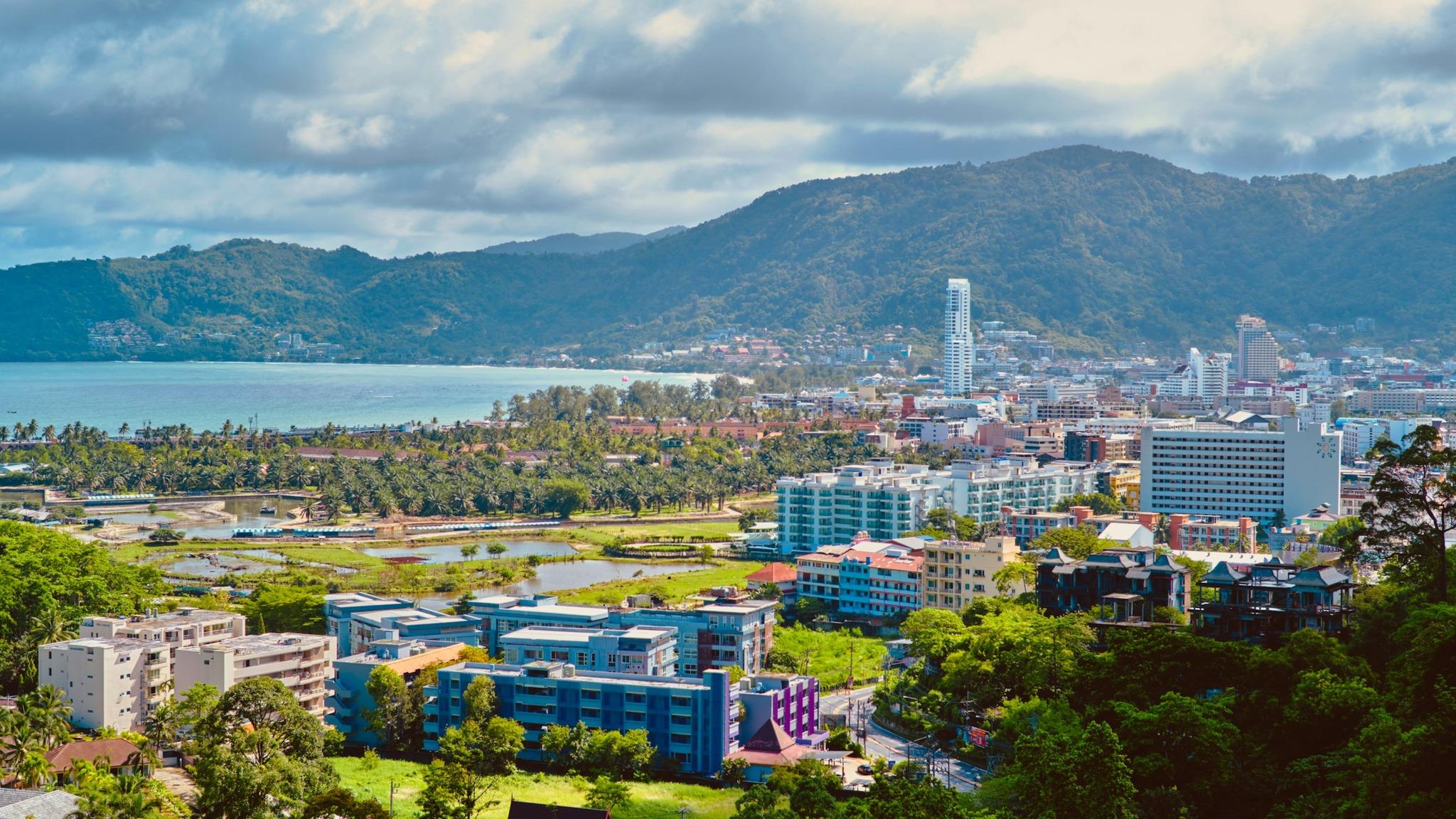

Phuket Hotel Tourism Market Update 2026
Phuket is poised for a new growth phase driven by targeted infrastructure investments and updated regulatory frameworks. Planned airport expansions and upgraded transport networks aim to ease existing capacity limits while improving connectivity across the island. At the same time, stricter oversight of unlicensed accommodations, revised building height rules, and newly implemented zoning guidelines are bringing greater formality to the market. These coordinated efforts are expected to facilitate more efficient, higher-density development and steer Phuket toward a more structured real estate environment.
Tourism dynamics in 2025 reflected a notable shift in arrival patterns. The island recorded 8.8 million passenger arrivals, offsetting a decline in Chinese visitors through strong performance across diversified source markets. Moving forward, Chinese tourism is projected to gradually rebound while emerging markets such as India, South Korea, and Israel continue to expand. Thailand’s positioning as a secure and neutral destination, combined with its function as a regional transit corridor between Australia, New Zealand, Europe, and other global regions, is anticipated to sustain further passenger growth and transit traffic.
In the hospitality sector, overall average daily rates (ADR) increased by 5% even as occupancy dipped by 6%. As new supply enters the market and regional competition grows, ADR expansion is expected to stabilize. The island’s tourism landscape remains highly segmented. Surin maintains the highest ADR alongside the lowest occupancy, posting a 21% rise in rates but a 9% drop in occupancy. Mai Khao ranks second in ADR, anchored by luxury resorts and secluded beachfront access. Bangtao saw a 2% decline in occupancy while recording a 20% ADR increase. Kamala, known for upscale family-focused properties, commands an ADR 40% higher than Bangtao, though it has experienced slower growth and a 24% occupancy decline. Patong continues to draw the highest occupancy levels despite an 8% annual drop, while Karon and Phuket Old Town serve comparable demand with economy and midscale offerings.
Looking ahead, the hotel pipeline from 2026 to 2030 comprises 41 projects, pushing total market supply beyond 100,000 keys by 2026. Bangtao and Cherngtalay will dominate future development, representing roughly 30% of the pipeline with a strong focus on the upper-upscale segment. Zoning reforms and integrated urban planning are transforming areas like Bangtao into structured clusters, marking Phuket’s evolution from a resort-centric destination toward a more institutionalized tourism market.
For buyers considering Phuket, this means that regulatory clarity, infrastructure modernization, and a shifting demographic profile are laying the groundwork for sustained, higher-density development. As supply pipelines mature and transit corridors strengthen, long-term investment opportunities align with a more formalized and diversified hospitality landscape.
Source: C9 Hotelworks, Phuket Hotel Tourism Market Update 2026.
Source: C9 Hotelworks
